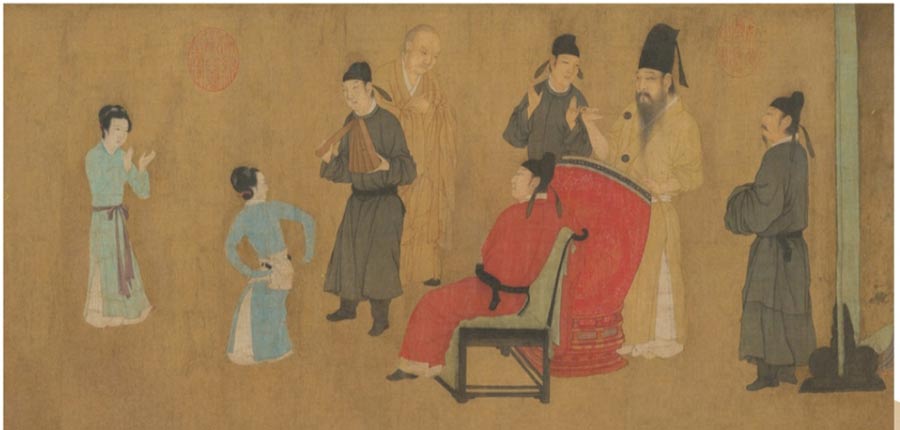
Night Revel of Han Xizai
Introduction
Night Revel of Han Xizai is an iconic painting in the realm of Chinese fine art, believed to have been created during the 10th century. The artwork is renowned for its intricate detailing and the vivid portrayal of a historical figure, Han Xizai, a high-ranking official during the Five Dynasties and Ten Kingdoms (907-960). The painting is attributed to the artist Gu Hongzhong, who was commissioned to capture a scene from Han Xizai's private life. This artwork stands as a testament to Chinese artistic prowess and provides a fascinating glimpse into the social and cultural dynamics of the time. This masterpiece is housed in the Palace Museum, where it continues to be a major attraction due to its historical and cultural significance.
Historical Context
The Night Revel of Han Xizai was created during the Five Dynasties and Ten Kingdoms period, a time of political fragmentation and cultural richness in China. This era followed the collapse of the Tang Dynasty (618-907) and preceded the consolidation of the Song Dynasty (960-1279). The Southern Tang Dynasty (937-976), one of the numerous regimes during this period, was characterized by its patronage of the arts and culture. The Southern Tang court was particularly notable for its support of artists and musicians, creating a vibrant cultural environment. Han Xizai, the subject of the painting, was a high official who became the focus of Emperor Li Yu's suspicions due to his lavish and extravagant lifestyle. The painting was purportedly a means to observe and document Han's activities to assess his loyalty and intentions. The artwork, therefore, not only serves as a piece of artistic achievement but also as a political instrument of its time, encapsulating the intricate relationships within the Southern Tang court.
The Artist: Gu Hongzhong
Gu Hongzhong was a court painter during the Southern Tang Dynasty and is best known for his work on the Night Revel of Han Xizai. His life, much like the art he produced, was deeply intertwined with the political and cultural currents of the period. Gu Hongzhong’s painting style is characterized by its realism and attention to detail. His work provides invaluable insights into the attire, architecture, and social customs of the Southern Tang Dynasty. Although not much is known about his personal life, Gu Hongzhong’s legacy endures through his paintings, which are considered masterpieces of traditional Chinese art. Night Revel of Han Xizai stands as his most celebrated work, showcasing his ability to capture the essence of human expression and the subtleties of social interaction.
Description of the Painting
Composition and Structure
The Night Revel of Han Xizai is a handscroll painting that measures approximately 3.3 meters in length and 28.7 centimeters in width. It is traditionally displayed in sections, allowing viewers to appreciate the sequential unfolding of scenes depicted within it. The composition is meticulously structured, providing a narrative flow that guides the observer through Han Xizai's revelry. The painting is divided into five sections, each illustrating different aspects of the banquet: music, dancing, rest, conversations, and the aftermath. Gu Hongzhong’s use of space and perspective, along with his detailed rendering of figures and objects, creates a vivid and immersive experience. His precise brushwork and the subtle use of color emphasize the opulence of the setting and the elegance of the characters, making it a technical marvel in Chinese art history.
Characters and Scenes
The painting features over 40 characters, each portrayed with distinctive expressions and gestures, illustrating the liveliness and sophistication of Han Xizai's night revels. Han Xizai himself is depicted in multiple scenes, providing a focal point throughout the scroll. His presence anchors the narrative, depicted variously as an observer, participant, and host, each role subtly conveying his multifaceted personality. The scenes within the painting include musicians playing traditional instruments, dancers performing with grace and poise, and guests engaged in social discourse and leisure. The attention to detail is evident in the depiction of the attire, which reflects the luxurious fashion of the period, and the setting, which captures the grandeur of Han Xizai’s residence. The interactions between the characters are intricately portrayed, showcasing the artist’s prowess in capturing the nuances of human behavior.
Cultural Significance
The Night Revel of Han Xizai holds significant cultural value, reflecting the complexities of court life and the role of art in political and social discourse. The painting serves as a historical document, offering insights into the cultural practices, fashion, and architecture of the Southern Tang Dynatsy. It also highlights the sophisticated nature of Chinese painting techniques and the importance of storytelling through art. The painting is a testament to the rich cultural tapestry of China during the 10th century, illustrating the interplay between politics, art, and society. Its preservation and continued display in the Palace Museum underscore its importance as a cultural artifact and its role in the broader narrative of Chinese history and art.
Influence on Later Art
Night Revel of Han Xizai has had a profound influence on subsequent generations of Chinese artists. Its realistic portrayal and narrative depth set a new standard for figure painting, inspiring artists in the Song Dynasty and beyond. The artwork's detailed depiction of social life and its narrative approach have been emulated and adapted in various art forms, including literature and theater. The painting's legacy is evident in the continued reverence it receives in art circles and its inclusion in art education curricula. It has also inspired modern interpretations and adaptations, showcasing its timeless appeal and relevance. The painting’s influence extends beyond the realm of visual arts, impacting cultural productions and academic studies that explore the intersection of art, history, and society.
Conservation and Exhibitions
The preservation of Night Revel of Han Xizai has been a priority for cultural institutions, given its historical and artistic significance. The painting is meticulously conserved at the Palace Museum, where it undergoes regular assessments to ensure its longevity. Advances in technology have facilitated digital preservation efforts, allowing for detailed documentation and analysis without compromising the physical integrity of the artwork. The painting is occasionally displayed in exhibitions, both domestically and internationally, where it continues to captivate audiences with its narrative richness and artistic excellence. These exhibitions often incorporate interactive elements and multimedia presentations, enhancing the viewer's understanding and appreciation of the painting. The digitalization of the painting has also enabled broader access, allowing people worldwide to experience its beauty and significance through online platforms.








